



Dentures – Wethersfield, CT
The Tried-and-True Solution for Tooth Loss
Missing teeth can detract from your daily quality of life in several ways. Not only might you feel self-conscious about the state of your smile, but you might also develop challenges eating and speaking.
Regardless of how many natural teeth you have remaining, our team in Wethersfield can rebuild your grin with lifelike dentures, which are the tried-and-true solution for tooth loss. Continue reading to learn more about this popular treatment, and please don’t hesitate to contact us to schedule your consultation.
Why Choose Wethersfield Dental Group for Dentures?
- Digital Impressions for Enhanced Comfort & Accuracy
- Customizable, Lifelike Materials
- Flexible Financial Plans Available
Who's a Good Candidate for Dentures?
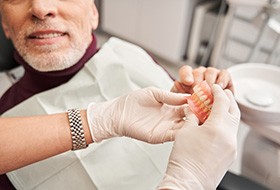
Dentures in Wethersfield are great because they can replace a large number of missing teeth. So, if you are struggling with moderate to severe tooth loss, you shouldn’t hesitate to schedule a consultation with us so we can determine if you’re a good candidate. You can also read on to learn more, including the qualities that we look for during the initial exam.
Effects of Missing Teeth

You rely on two complete arches of teeth to perform certain tasks, like chewing, speaking, and smiling. As a result, tooth loss can quickly lead to several issues, including difficulty digesting foods, trouble enunciating clearly, and not feeling your best. That’s why we recommend exploring your treatment options, like dentures! This tried-and-true tooth-replacement solution is crafted from only the best materials and is custom-made with your face shape, dental needs, and smile goals in mind.
What Qualifies You for Dentures?

During your consultation, we will review your dental history, take the necessary X-rays, and complete a visual exam to determine if you’re a good candidate for dentures. If the answer is “yes,” then we will begin the process of creating your custom restoration. If the answer is “no” because you have any pre-existing issues, like gum disease, then we will need to address them first. That way, the final result is a smile that’s both healthy and beautiful.
Alternative Tooth-Replacement Options
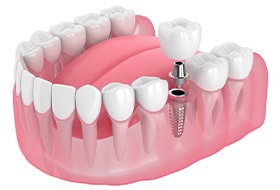
Although dentures are versatile, they aren’t always the solution. For instance, if you’re only missing a single tooth, then we will likely recommend one of the other tooth-replacement solutions that we offer:
- A Dental Bridge – As you may have guessed from the name, a dental bridge is designed to literally “bridge” the gap in your smile. This is accomplished by placing a dental crown on each side of the gap and connecting them with the replacement tooth.
- A Dental Implant – This state-of-the-art tooth-replacement option replaces both the root and crown of your missing tooth! Plus, it helps prevent bone loss, provides unmatched stability, and can last for three decades or longer with proper care.
If you’d like to learn more about how we can rebuild the strength of your bite and the appearance of your smile, then give us a call! That way, a helpful member of our team can schedule a consultation. Once that appointment is on the calendar, you’ll be a big step closer to having the healthy, beautiful smile that you deserve.
Types of Dentures
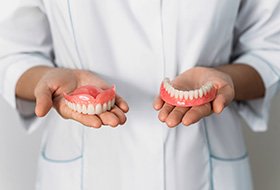
Did you know that there are a few different types of dentures? Once our team confirms that this service is right for you, we’ll recommend one of the following options based on our findings during your examination:
Partial Dentures
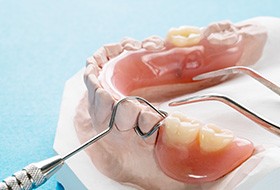
If you’ve lost several teeth sporadically throughout your mouth, partial dentures might be best for you. They usually consist of a gum-colored base, often containing metallic clips that anchor to healthy teeth in your mouth, and include the correct number of pontics (artificial teeth). These are usually made from resilient ceramic or resin and are carefully arranged to close all the gaps in your grin.
Full Dentures
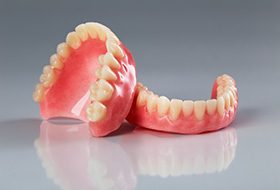
This is likely what you imagine when you think of dentures, and it is often recommended for patients who have lost all or most of their natural teeth. These restorations usually have a gum-colored acrylic base set with ceramic pontics that can be customized to look and feel as lifelike as possible, and form a suction against your gums to remain in place. They’re intended to replace entire arches, which sometimes requires extracting remaining teeth to ensure they fit correctly.
Implant Dentures
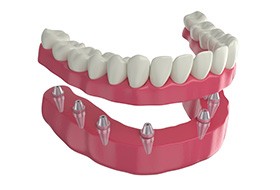
Are you worried your new teeth might be unreliable, or are you seeking a more permanent solution for tooth loss? If so, implant dentures might be recommended. This is the only option that involves placing four to eight support rods directly into your jaw, which eventually fuse with the bone and are firmly rooted. Then, we provide specially designed prosthetics that anchor to your implants for sturdier, more resilient replacements.
Benefits of Dentures

When you’re missing multiple teeth, everyday tasks like eating, speaking clearly, and smiling with confidence can be a challenge. The great news is that dentures can be a life-changing tooth replacement option for anyone who is missing several, most of, or all their natural teeth, thanks to their amazing ability to improve your quality of life. If you’ve suffered from tooth loss, dentures can help give your smile a second chance by providing the following incredible benefits!
Psychological Benefits

It can be hard to accept tooth loss. It can take a negative toll on your self-esteem and social life, as well as increase your risk of sadness and depression. If you’re insecure about your smile following toothless, you may be less likely to engage socially. The great news is that by restoring the appearance and function of your smile with dentures, you are likely to experience a boost in confidence and self-esteem. Dentures can even reduce anxiety about your appearance, speech articulation, chewing abilities, and much more while engaging socially.
Clearer Enunciation

When you’re missing teeth, it can be very difficult to speak clearly. To pronounce and perform certain words, your lips and tongue need to be positioned properly. Without the ability to touch your tongue to certain teeth, some words can be very difficult to say clearly. Thankfully, your dentures act as your missing teeth, thereby allowing you to enunciate more clearly while speaking. In fact, after a short adjustment period and with a little bit of practice, you’ll likely be speaking confidently once again!
Improves Nutrition

Because many nutritious foods like certain vegetables, fruits, and healthy proteins are tough in texture, they can be difficult to chew when you’re missing teeth. Worse yet, this can often lead to indigestion and malnutrition. With an improved ability to chew, your new dentures will allow you to enjoy a more expansive diet, full of the nutritious, delicious foods you may have had to decline in the past. Ultimately, your prosthetics can help your body receive the many essential nutrients needed for optimal overall health and wellness.
Preserves Oral Health
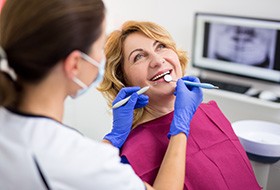
If you’re still fortunate enough to have any remaining natural teeth, getting dentures can help prevent them from shifting to other areas of your mouth. They can also bear some of the weight of regular chewing, thereby reducing the wear and tear on your existing teeth.
Expands Opportunity

Your smile is your calling card, and one of the very first things people notice about you. When it comes to job interviews, sales, and even getting promotions, it’s crucial to make an excellent first impression, and having a complete smile is a major advantage. In fact, according to a 2019 study, the probability of being employed was negatively associated with poor oral health, meaning that your damaged smile could be costing you money and opportunities!
Understanding the Cost of Dentures
While today's dentures are trustworthy, you should still check their price before getting any. (Even the best restorations won’t help if they “break the bank,” so to speak.) The cost of dentures can vary, though; you'll need to see us in person to get an estimate. Once you've consulted our team, we'll work tirelessly to provide the affordable care you need. Please keep reading for further details or call us to hear more.
Factors That Affect the Cost of Dentures
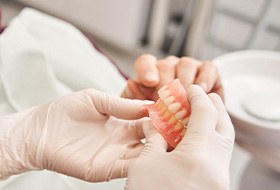
Dr. Phadnis and co. will check the factors affecting denture costs at your consultation. More specifically, they’ll assess you regarding:
- Preparatory Care – Some patients need preparatory care before they can get dentures. If you’re one such person, the extra procedures will add to your overall treatment price.
- Type of Acrylic – As it turns out, labs can make a denture’s base from various kinds of acrylic. The type used will affect whether your dentures cost more or less.
- Type of Artificial Teeth – A denture’s artificial teeth cost little when they’re acrylic, whereas they become pricier when they’re porcelain.
Beyond these factors, remember that cheap dentures use poor materials. You should pick a moderately priced prosthetic to ensure your restored smile looks, works, and feels great.
Are Implant Dentures More Expensive?
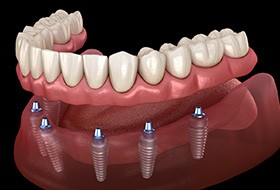
Though pricier than the traditional type, an implant denture is a solid long-term investment. It offers more perks than a regular denture ever could.
Just consider how implant dentures work. Since their implant posts fuse with your jaw, they’re incredibly stable and don’t fall out; they represent a new set of permanent teeth. Furthermore, implant dentures are capped with porcelain surfaces that look natural and lifelike. You can trust them to look just as natural as the pearly whites you lost.
Of course, implant dentures also “pay off” financially. That they can last 30 years or more means they seldom need repairs or replacements. In other words, implants leave you money you’d otherwise spend fixing regular dentures or dental bridges.
Does Dental Insurance Cover Dentures?

Most dental insurance plans cover dentures, which are largely viewed as “medically necessary.” They’ll even cover 50% of the treatment cost if you’ve already met your yearly deductible.
Still, there are exceptions to the above. A given policy may exclude denture coverage, have special rules for restorations, and so on. That being the case, you should confirm your benefits before you fully commit to the treatment process.
Other Options for Making Dentures Affordable

Aside from insurance, other ways exist to make dentures affordable. The most notable of these are our alternative payment options, which include:
- Dental Membership Plans – By paying an annual fee, you can join our Discount Dental Plan. The latter gives you a 15% discount on denture treatment.
- Flexible Financing – We work with both Cherry and CareCredit, reputable 3rd party lenders who help patients pay for their treatments in monthly installments.
You needn’t strain yourself to buy good dentures. Instead, please visit us – we’ll make your prosthetic teeth budget-friendly!
Dentures Aftercare

Congratulations on restoring your beautiful smile with the help of your durable new dentures in Wethersfield! However, now that you’ve replaced your missing teeth, it’s important to take care of your prosthetics so they last as long as possible. To that end, it is important that you maintain your regular oral hygiene practices, including visiting your dentist every six months. These appointments are your opportunity to have your restorations checked and cleaned and the condition of your oral health closely monitored for things like gum disease and oral cancer. When you wear dentures, it can sometimes be harder to spot changes in your oral cavity on your own, making collaborative care from your dentist extremely important!
Removable Dentures
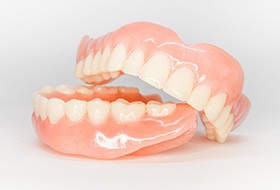
Remove After Eating
To ensure that your dentures don’t become stained or foul smelling, it’s very important that you remove them after each meal and rinse them well with regular tap water. This will help prevent food and plaque from building up between brushings. Never use hot water when you clean your restorations, as this could cause them to become warped and stop fitting properly.
Clean Your Restoration
Dentures need to be cleaned regularly to prevent them from looking, feeling, and smelling dirty. Always remove them completely from your mouth when cleaning them so you’re sure to reach every surface. Your restorations should be flossed daily and gently scrubbed with a soft-bristled toothbrush and either unscented hand soap, mild dish soap, or a cleanser designed specifically for denture care. Never use regular toothpaste, as it is too abrasive and can damage them. Once clean for the evening, you can gently place them into a glass of water or denture soak so they don’t dry out, as this can make them crack or lose their shape.
Don’t forget to rinse your dentures well before putting them back in your mouth, as these cleansers weren’t meant to be ingested!
Keep Your Dentures Safe
Although they can last for five to seven years with proper care, your dentures aren’t indestructible. Thus, it is important to keep them safe when they are both in and out of your mouth.
When cleaning them, be sure to line the sink or countertop with a towel in case you accidentally drop them. This will cushion the fall and hopefully reduce the likelihood of them breaking.
Be sure to keep your dentures out of the reach of small children and pets, too!
Remove When You Sleep
After the first 24 hours with your new dentures in Wethersfield, it is important to begin removing them every night before you go to bed. When you wear prosthetics, it can restrict the circulation in your gums, which may cause soft-tissue irritation. Furthermore, sleeping in dentures can increase your risk of pneumonia and tongue plaque.
Dentures can be soaked overnight in either water or denture soak, but be sure not to let them dry out, as this can permanently damage them or make them lose their secure hold during use.
Notice Changes
While it is still extremely important to visit your dentist every six months for regular oral health screenings, be sure to pay close attention to your mouth on your own, too. If you notice any changes such as mouth sores, irritated gums, or signs of oral infection, notify us right away.
Should you damage your dentures, never attempt to glue them back together or fix them yourself, as this often results in worsening the damage to the point of irreparability. Instead, contact us as soon as possible for assistance.
If your dentures begin to shift, click, or show other signs of improper fit, please give us a call, as it may be necessary to reline or replace them.